Claude Co-Worker AI Will Change Hiring Patterns
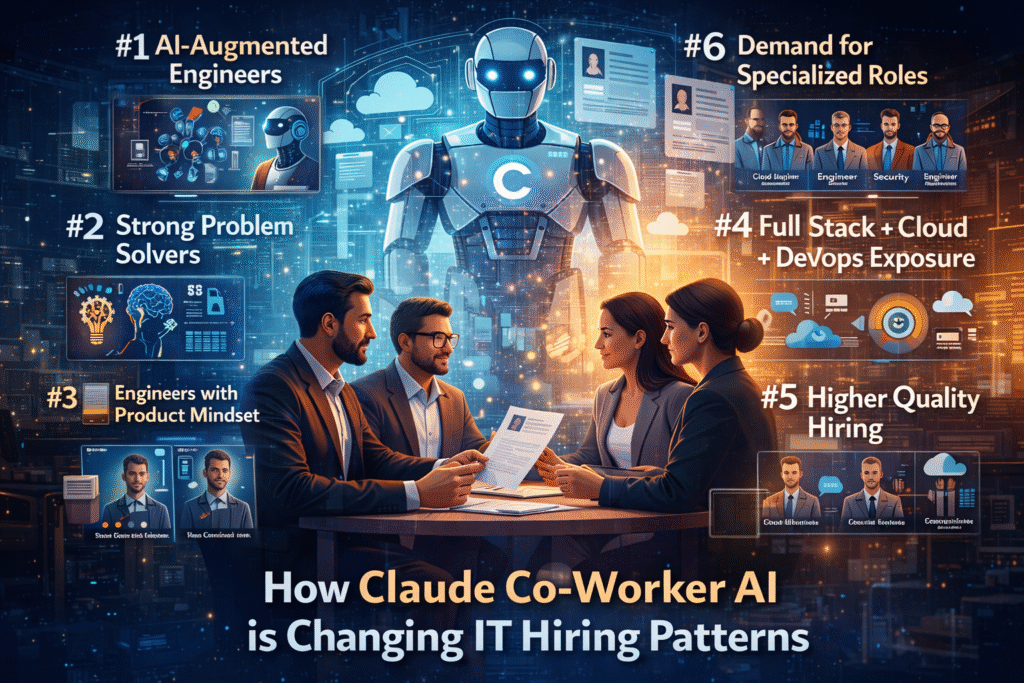
The rise of AI tools in software development is not only changing how developers code — it is also changing how companies hire developers.
AI assistants like Claude Co-Worker AI are capable of writing code, debugging, documenting, and even suggesting system architecture. As a result, businesses are now rethinking what they expect from a software engineer.
This shift is already influencing recruitment strategies across startups, mid-size companies, and enterprise organizations.
Let’s explore how Claude Co-Worker AI is changing IT hiring patterns and what skills companies will prioritize in the coming years.
Why Hiring Patterns are Changing
Earlier, companies hired software engineers mainly based on:
- Programming language knowledge
- Coding speed
- Framework experience
- Years of experience
- Certifications
But now, AI tools can generate code instantly, making basic coding knowledge less valuable than before.
Today, companies are asking a different question:
Can this engineer deliver real outcomes using AI tools effectively?
New Hiring Trend #1: AI-Augmented Engineers
Companies are now looking for engineers who can work alongside AI tools such as:
- Claude Co-Worker AI
- ChatGPT
- GitHub Copilot
- Cursor AI
- AI-powered testing and debugging tools
The expectation is clear:
- Engineers should know how to use AI to increase productivity
- Engineers should validate AI-generated output
- Engineers should reduce development cycle time using automation
Instead of “writing code manually,” engineers are expected to work smarter.
New Hiring Trend #2: Strong Problem Solving Over Coding Skills
One major hiring shift is that companies are focusing less on “who can code faster” and more on:
- Logical thinking
- Root cause analysis
- Debugging ability
- System understanding
- Decision-making skills
AI can generate code, but AI cannot understand business complexity the way humans do.
That is why hiring managers will strongly prefer engineers who can:
- Understand the real problem
- Propose the right approach
- Build scalable solutions
- Avoid future technical debt
New Hiring Trend #3: Engineers With Product Mindset
In the AI era, companies are hiring engineers who understand:
- Why the feature is required
- How it impacts the business
- How it improves customer experience
- How it generates revenue or reduces cost
Developers who only focus on coding may struggle.
But engineers who understand business and product thinking will always be valuable.
New Hiring Trend #4: Full Stack + Cloud + DevOps Exposure
Since AI tools can generate frontend and backend code quickly, companies expect engineers to take more responsibility across the software lifecycle.
This includes:
- Deployment understanding
- Cloud hosting exposure (AWS/Azure/GCP)
- CI/CD pipelines
- Containerization (Docker, Kubernetes)
- Monitoring and logging tools
- API integration skills
The future engineer is not just a developer — they are a solution owner.
New Hiring Trend #5: Fewer Entry-Level Jobs, But Higher Quality Hiring
AI can handle many entry-level tasks like:
- Writing basic APIs
- Generating UI components
- Writing documentation
- Writing boilerplate code
So companies may reduce hiring for purely repetitive tasks.
However, this does not mean freshers will lose jobs.
Instead, companies will hire freshers who have:
- Strong project experience
- Internship exposure
- AI tool usage knowledge
- Good communication skills
- Real-time problem-solving ability
Freshers who build a strong portfolio will still have huge opportunities.
New Hiring Trend #6: Demand for Specialized Roles Will Increase
AI will increase demand for specialists such as:
- Cloud Engineers
- DevOps Engineers
- Security Engineers
- Data Engineers
- ML Engineers
- System Architects
- Backend Performance Engineers
- SRE (Site Reliability Engineers)
Because AI-generated code still needs:
- Security review
- Performance optimization
- Production support
- System stability
How Claude Co-Worker AI Impacts IT Recruitment
From a recruitment perspective, hiring managers will now evaluate candidates differently.
Recruiters will need to check:
- Can the candidate explain system design?
- Can they debug and solve real production issues?
- Can they use AI tools effectively without dependency?
- Do they have practical deployment and cloud exposure?
- Can they collaborate with product and business teams?
This means recruitment will become more skill-driven and less “resume-driven.”
What IT Professionals Should Do Now
To stay relevant in the next 2–5 years, IT professionals should focus on:
- Learning system design fundamentals
- Strengthening backend and architecture knowledge
- Understanding cloud platforms
- Practicing DevOps basics
- Improving communication and documentation skills
- Learning how to use AI tools like Claude efficiently
- Building real-world projects and portfolio
AI will not replace engineers, but engineers who adapt will become more valuable.
Conclusion
Claude Co-Worker AI is not killing software jobs, but it is definitely changing the hiring landscape.
Companies will continue to hire software engineers, but the expectation will shift toward:
- problem solving
- system ownership
- AI collaboration
- end-to-end delivery
In the coming years, the best engineers will not be those who code the fastest, but those who can deliver the best solutions using AI as a productivity partner.